Most businesses are not short on data. Sales figures, stock levels, and costs accumulate daily in spreadsheets and systems across the organization. What is missing is the connection between all that data and the decisions leaders actually make. AI-powered analytics closes that distance.
The gap between having data and using it
In many organizations, answering a simple question like which product line made money last quarter takes days of manual spreadsheet work. By the time the answer arrives, the decision has already been made on instinct. The data existed the whole time. What was missing was the pipeline that turns records into answers while the question still matters.
What modern BI actually surfaces
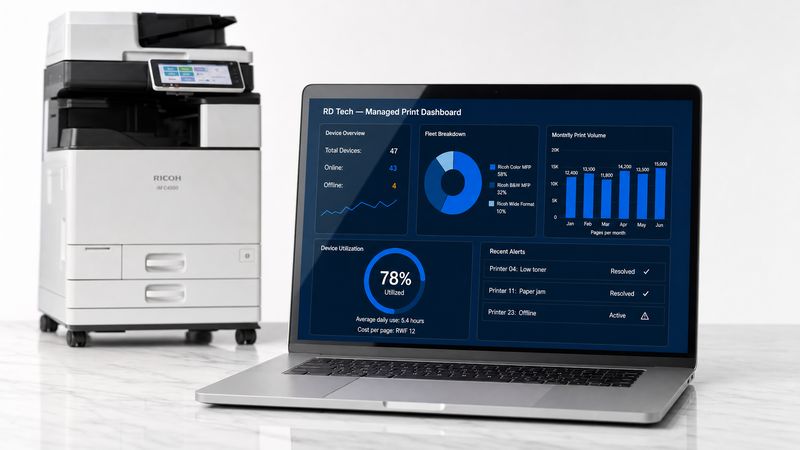
Business intelligence dashboards connect directly to your operational systems and update continuously. Instead of a monthly report, leadership sees revenue, margins, stock movement, and customer trends as they happen, with the ability to drill from a national total down to a single branch or SKU. Anomalies stand out immediately: the expense line drifting upward, the region falling behind, the product quietly outperforming.
Data is useless without the infrastructure to act on it.
Prediction changes the conversation
Descriptive dashboards tell you what happened. Predictive analytics estimates what happens next: which customers are likely to churn, what demand next quarter looks like, when equipment will need service. In operations and finance this shifts planning from reacting to last month toward preparing for next month, with forecasts that improve as the models see more of your history.
Starting without a data science team
You do not need to hire analysts to begin. Modern platforms ship with prebuilt connectors and AI-assisted insights that work on the systems you already run. The practical path is narrow and concrete: pick one decision that matters, such as cash flow forecasting or inventory reorder points, get that data flowing into one dashboard, and expand only after the first win pays for itself.
RDTech connects business systems, ERP, and analytics into one managed environment, giving Rwandan organizations the infrastructure to turn their data into decisions. Explore RDTech managed IT and ERP solutions →